
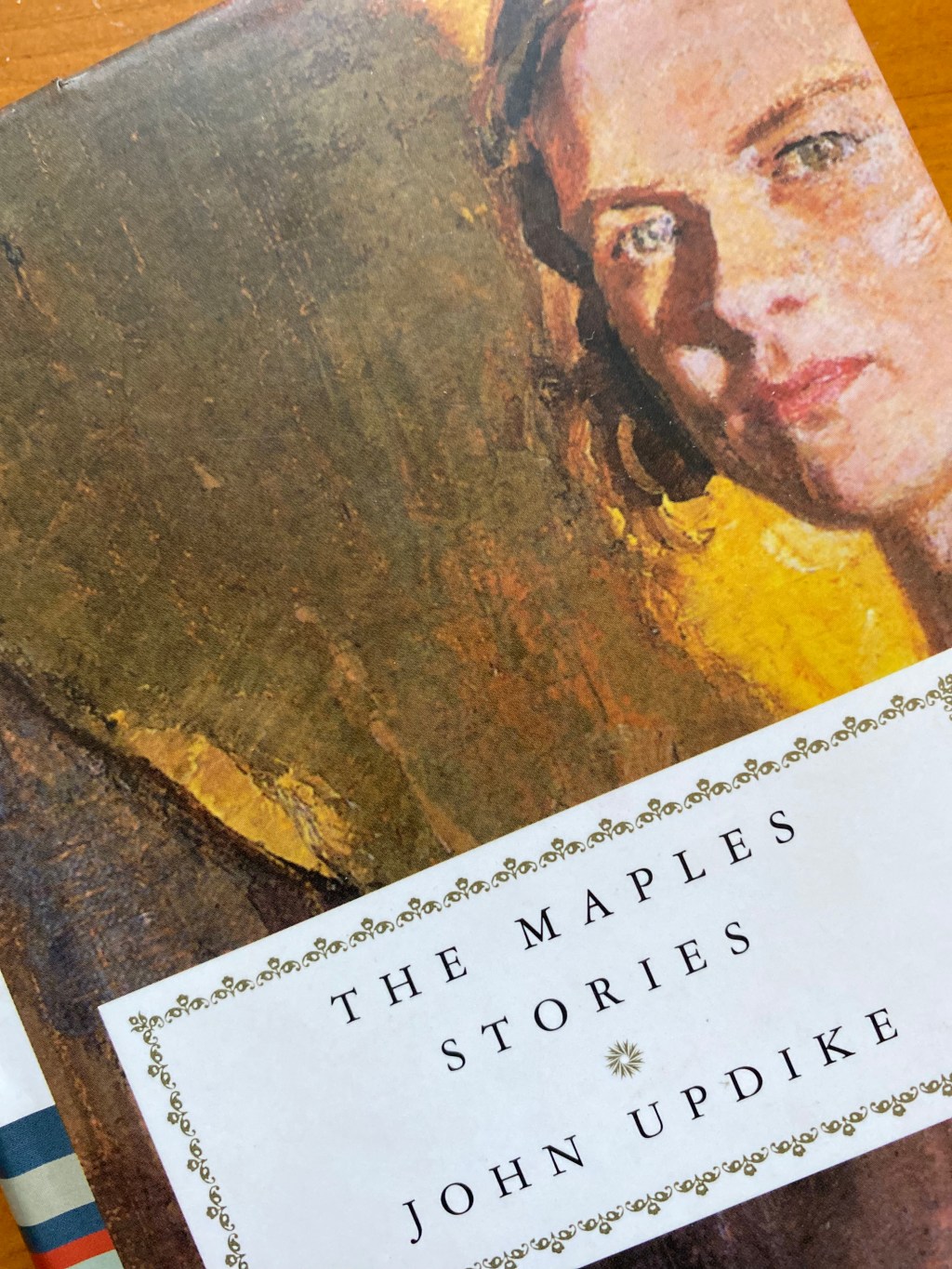
Prior to the summer of 2009, the name John Updike meant almost nothing to me. All I knew was that he belonged to a certain class of writer—white, male, and, as of January 27 of that year, dead.
Compared with most of my writerly peers, I became a reader rather late. I was somewhere between twenty and twenty-one when I picked up a novel for the first time with the intention of actually reading it. My earliest TBR piles included thrillers written by the likes of Richard Adams, Peter Benchley, Christopher Moore, and the duo of Douglas Preston and Lincoln Child. Everything changed when a college professor friend introduced me to one of Updike’s best-known short stories, “A&P.”
A coming-of-age story about herring snacks, Queenie’s scandalously bare shoulders, and Sammy’s gesture of occupational seppuku, “A&P” opened my eyes to something new. It also compelled me to explore Updike’s short-story collections, followed by his longer works: the Rabbit novels, Couples, Of the Farm, Marry Me, S., A Month of Sundays, etc. His novel-slash-collection The Maples Stories, which catalogs the adolescence, life, death, and afterlife of a specific New England couple’s marriage, had the greatest impact on me.
Like his other novels, Maples features rich prose that reminds me of a well-crafted poem. The story follows Joan and Richard Maple, imperfect spouses who struggle and persevere, expand and contract, destroy themselves, and then find their respective paths to post-divorce reinvention. As someone who spent much of his thirties wrestling with his own personal and professional bugbears, I found Maples inspiring, if not prescriptive.

Updike led me to other masters of literary fiction: Carver, Chabon, Cheever, Franzen, Harrison, Irving, Proulx, Roth, and Strout, as well as their many descendants. I adored the way those writers put their primary characters through the wringer—poverty, adultery, illness, the deaths of loved ones—and permitted most of them to emerge from the ashes more or less intact.
Not only did Updike change the kinds of books I wanted to read, but he also gave me a better understanding of the kinds of stories I wanted to write. More so, his prose helped me realize that even the darkest of times come to an end, and that brighter days are not only possible but also inevitable. I’d be a different person today, a lesser person, without him.
Originally published in the fall/winter 2024 edition of Neshaminy: The Bucks County Historical and Literary Journal, as part of a feature story about the Pennsylvania-born John Updike


 William J. Donahue